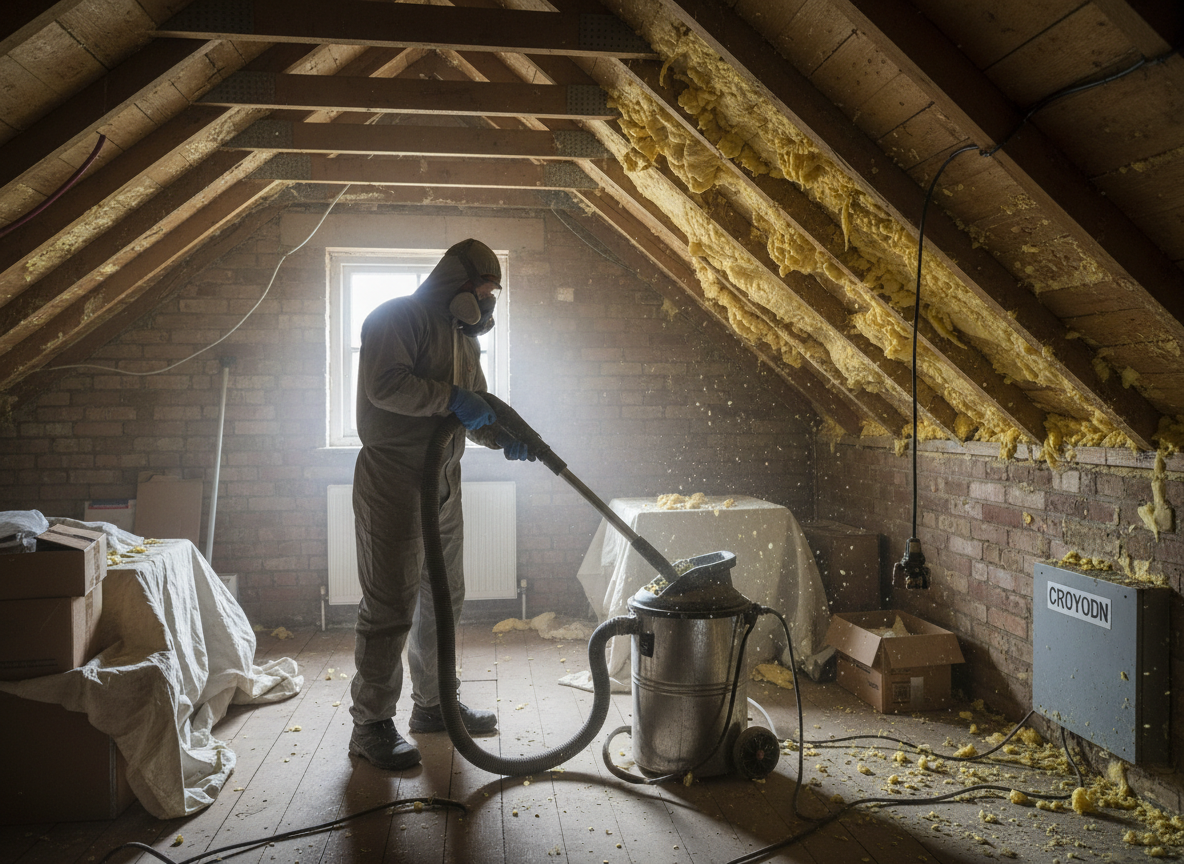
Thermal spray foam removal in Croydon often involves older Victorian and Edwardian terraces where closed-cell foam was applied directly to rafters and underfloor voids decades ago. These installations trap moisture against timber and plaster, leading to rot that only becomes visible once the foam starts to degrade. Heat application must be controlled precisely because rapid temperature spikes can loosen lath and plaster ceilings below, especially in the narrow roof voids common along roads like those near East Croydon station.
Greater London weather patterns with frequent rain and high humidity make timing critical. Foam removal during wet months requires extra containment to prevent water ingress into exposed timbers while the material is being peeled away. In properties around Croydon town centre, shared party walls add another layer of complexity as vibrations from scraping tools can transmit to neighbouring homes, requiring temporary acoustic barriers and careful sequencing of work.
Edge cases include foam that has bonded to electrical cabling or pipework in post-war semis common in the Addiscombe and Shirley areas. Technicians must isolate circuits and trace pipes before applying heat to avoid damaging services hidden behind the insulation. Local building practices from the 1960s and 1970s often used bitumen-based underlays that react with certain foam types, releasing odours during removal that need ventilation planning through existing loft hatches.
Regulation notes for Croydon jobs focus on waste classification. Removed foam is typically treated as construction waste and must be bagged on site before transport, with records kept for larger residential projects. Homeowners in terraced rows benefit from pre-job surveys that check for asbestos in original ceiling finishes, a common finding in Croydon stock built before 1980.
Technician insight
In Croydon, the thing that catches most people out with thermal spray foam removal is the tight roof voids in Edwardian terraces where foam bonds tightly to lath and plaster; one wrong heat pass and you pull down ceilings that were already fragile from decades of London damp.
Loft Foam Removal in a Croydon Terrace
Problem: Damp patches appearing in a 1930s semi near Croydon town centre. What we found: Closed-cell foam trapping condensation against rafters with no ventilation path. What we did: Sectional thermal removal over two days with containment to protect the rooms below. Outcome: Exposed timbers dried out and loft ready for proper insulation upgrade.
How it works
- 1
Initial Survey
Inspect loft and wall cavities in the Croydon property to assess foam type, thickness, and any hidden services or moisture issues.
- 2
Containment Setup
Install dust sheets, negative air machines, and barriers to protect living spaces below, especially important in multi-storey terraces.
- 3
Thermal Extraction
Apply controlled heat to soften foam sections, then peel and bag material while monitoring for plaster or timber damage.
- 4
Clearance and Ventilation
Remove all residue, clean surfaces, and advise on improved loft ventilation to prevent future damp in Greater London conditions.
Pricing
Upfront quotes provided after inspection; cost depends on property age, foam depth, and access constraints typical of Croydon terraces.