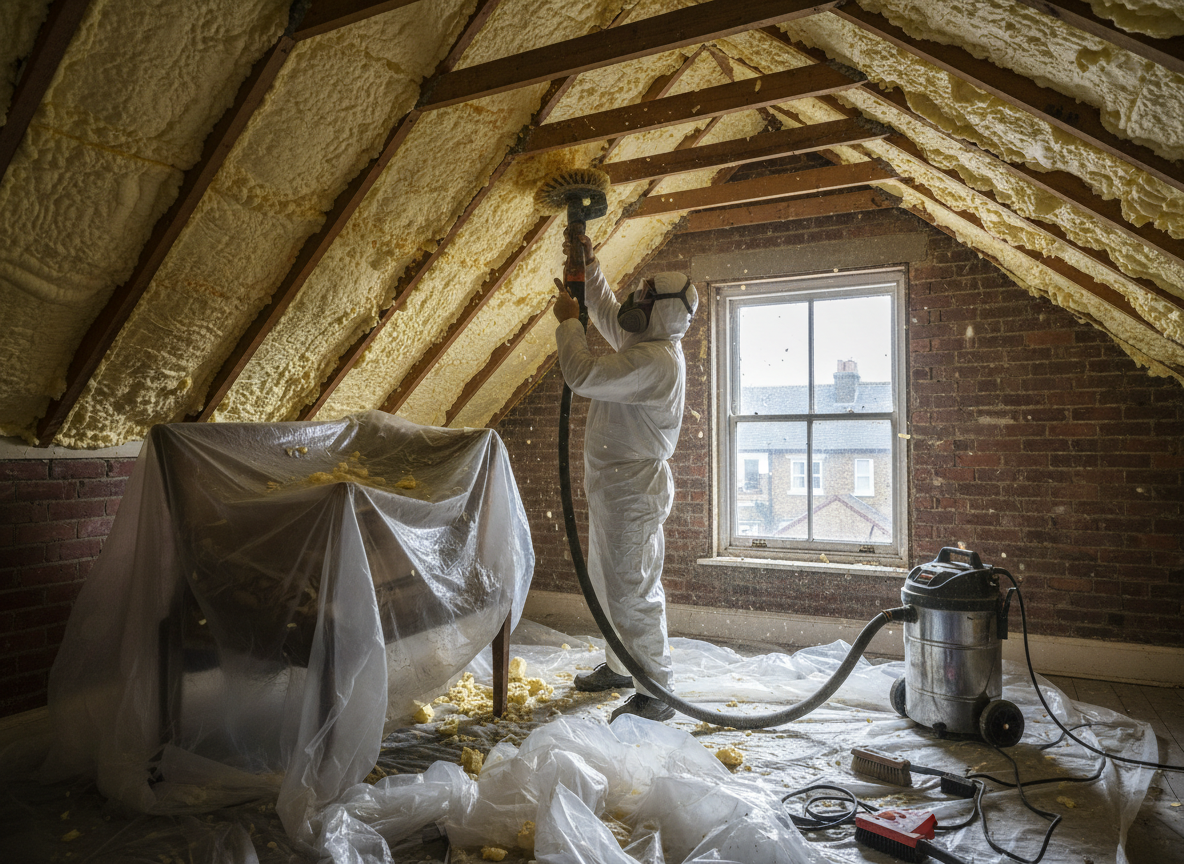
Croydon’s older terraced and semi-detached homes, particularly those built before the 1930s in areas like Thornton Heath and South Norwood, often have narrow roof voids where spray foam was applied directly to original lath and plaster or timber sarking. Same day removal is frequently required when the foam begins to degrade in the region’s persistently damp winters, trapping moisture against rafters and accelerating rot. Technicians must work around tight access hatches and shared chimney stacks common in these streets, using negative air machines to prevent insulation dust from migrating into living spaces below.
The local clay-heavy soil and high water table around East Croydon and Addiscombe mean many lofts suffer condensation issues that react with polyurethane foam, causing it to become brittle and crumbly faster than in drier counties. Same day jobs therefore focus on full extraction down to the substrate, followed by immediate ventilation checks to avoid re-contamination overnight. Edge cases include foam that has migrated behind electrical cables or into party wall cavities, requiring careful sectional removal to stay within party wall legislation limits.
Weather patterns in Greater London add pressure: sudden heavy rain can enter through temporary roof openings during extraction, so teams carry tarpaulins and temporary ridge vents suited to the pitched roofs typical here. Materials removed are bagged on site for licensed disposal, and every same day project ends with a borescope inspection of joists to confirm no residual foam remains that could affect future insulation or roofing work.
Homeowners in Croydon often discover the need for same day removal after failed energy surveys or when selling, as surveyors flag non-breathable foam in pre-1980s properties. The work must respect the dense street layout, with equipment carried through narrow side returns rather than craned, extending setup time on back-to-back terraces.
Technician insight
In Croydon, the thing that catches most people out with same day Spray Foam Removal is how the damp winters here make foam bond tightly to the original lath and plaster in pre-war terraces around Thornton Heath—pull too hard and you damage ceilings below, so the job always needs slow sectional work rather than bulk stripping.
Semi-detached Loft in South Norwood
Homeowner in South Norwood reported musty smells and failed loft insulation survey. On arrival we found 150 mm of closed-cell foam delaminating from rafters in a narrow Victorian void. Same day extraction cleared the foam, revealed minor timber staining, and left the space ventilated before evening damp set in.
How it works
- 1
Initial Assessment
Technician arrives within hours, inspects loft access, foam depth, and any signs of moisture or structural contact in the Croydon property.
- 2
Containment Setup
Negative pressure zones and dust barriers are installed to protect living areas, especially important in multi-occupancy terraces around the Interchange area.
- 3
Foam Extraction
Mechanical removal of foam layer by layer, clearing down to rafters and checking for hidden pockets behind cables or in eaves.
- 4
Site Clearance and Verification
All waste removed, surfaces cleaned, and borescope check confirms complete extraction before handover same day.
Pricing
Same day spray foam removal carries a premium over scheduled work due to rapid mobilisation from Station Road; final cost depends on loft size, foam thickness, and access constraints in Croydon terraces.