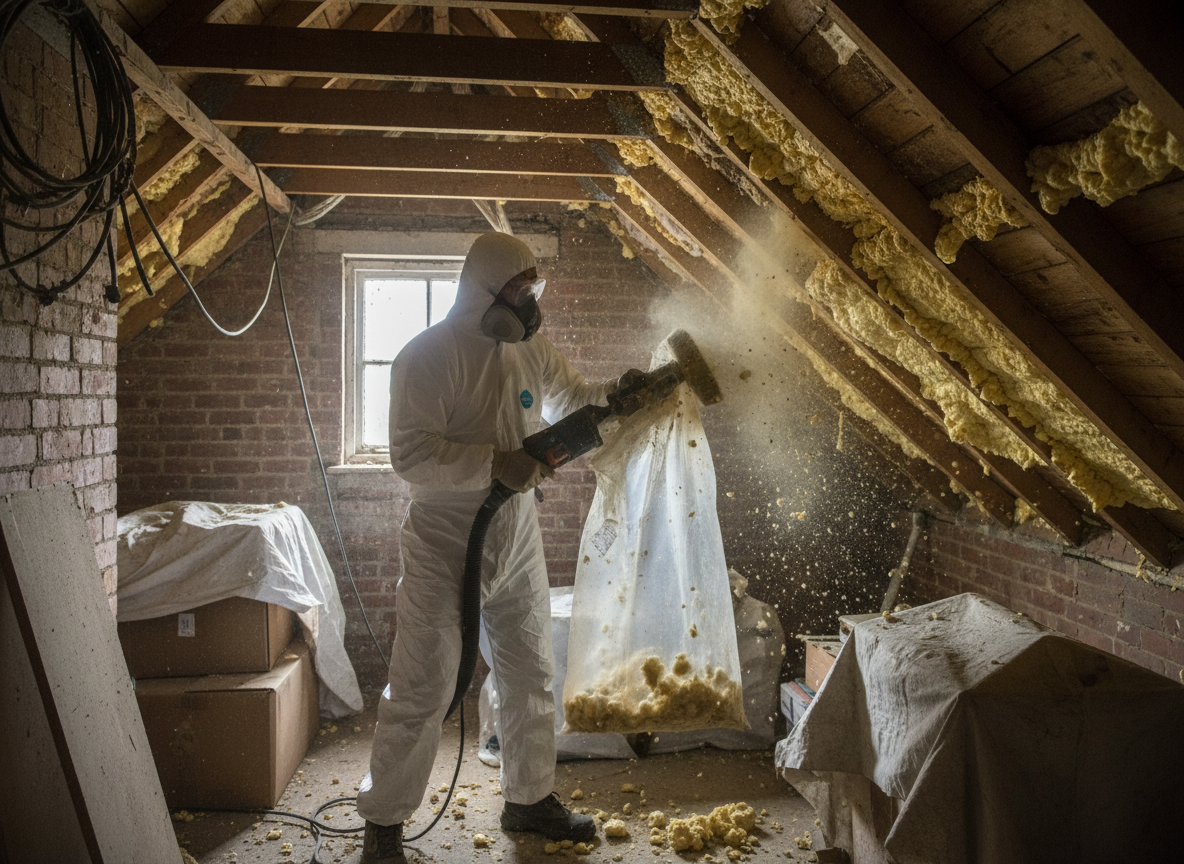
Spray foam insulation removal in Croydon properties often involves older housing stock such as Victorian terraces around East Croydon and interwar semis in Thornton Heath. The closed-cell material bonds tightly to joists and brickwork, and improper extraction can leave residue that traps moisture against timber, accelerating rot in properties built before the 1950s. Technicians must cut the foam in controlled sections while protecting electrical cables and pipework that run through many Croydon lofts.
Access challenges appear frequently in the area because many roofs have low eaves and limited loft hatches. Removal crews use negative-air machines to contain dust when working above bedrooms in terraced houses near the station. Once the bulk foam is taken out, residual layers are scraped from rafters and treated with a neutralising wash to prevent off-gassing that can linger in poorly ventilated spaces common in the CR postcode.
Handling Hidden Hazards
Older Croydon homes sometimes contain asbestos-containing materials around chimney breasts and pipe lagging. Removal teams inspect for these before starting foam extraction and isolate any suspect areas. Wet foam from past leaks in properties near the Wandle valley tributaries also requires different cutting techniques to avoid spreading mould spores through the building.
Post-Removal Ventilation
After foam is cleared, many Croydon homeowners need improved roof ventilation to meet current building standards. Installers fit additional ridge vents or soffit grilles to reduce condensation risk in the same lofts that previously relied on the foam for airtightness.
Technician insight
In Croydon, the thing that catches most people out with spray foam insulation removal is the way the material has expanded behind lath-and-plaster ceilings in 1930s houses around Addiscombe. Once you start cutting, the pressure can crack the ceiling from above, turning a simple loft job into a full-room repair.
Thornton Heath Terrace Loft
Homeowner in a 1930s semi near Thornton Heath station reported musty smells after removing old loft boards. Inspection showed closed-cell foam bonded to rafters and trapping damp from a previous roof leak. Crews isolated the affected section, cut the foam in strips to avoid disturbing wiring, neutralised the timbers, and left the space ready for new mineral wool insulation.
How it works
- 1
Site Assessment
Inspect the property at Interchange, Station Rd base address or on-site in Croydon to measure foam depth, check for hidden services, and confirm roof structure condition.
- 2
Containment Setup
Erect dust barriers and negative-air filtration units to protect living spaces below, especially important in terraced homes with shared walls.
- 3
Foam Extraction
Cut and remove foam in manageable sections, scraping residue from timbers while monitoring for any structural timber softening common in older Croydon stock.
- 4
Final Clean and Disposal
Vacuum all surfaces, neutralise remaining film, and remove waste to licensed facilities before handing the loft back for new insulation or inspection.
Pricing
Costs depend on property age, foam thickness, and access restrictions typical in Croydon terraces and semis.