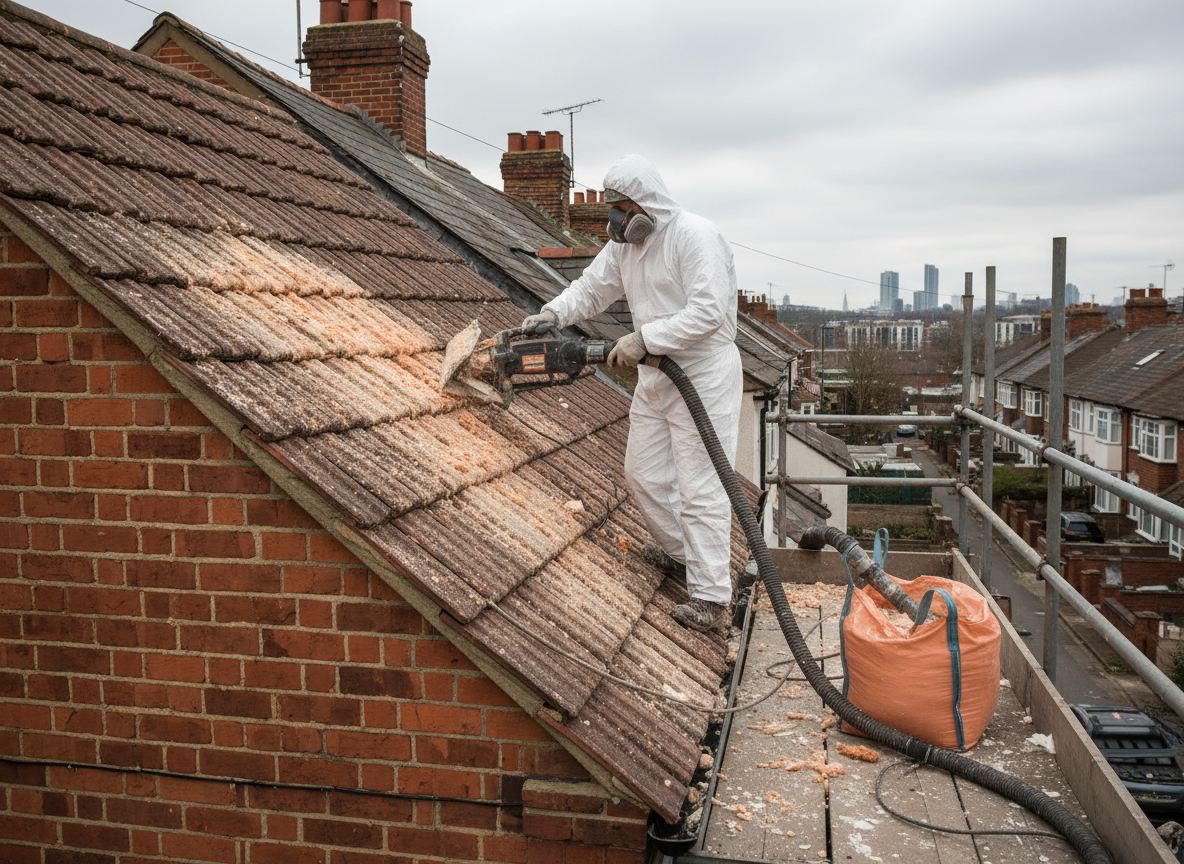
Croydon’s housing stock ranges from Victorian terraces in areas like Thornton Heath to 1930s semis in Shirley and post-war estates around New Addington. Spray foam applied directly to roof undersides in these buildings often seals in moisture from the area’s frequent heavy rainfall, leading to timber decay and reduced ventilation. Removal requires careful cutting and peeling to avoid disturbing original rafters that have already been weakened by decades of condensation cycles typical in Greater London’s damp climate.
Edge cases appear regularly on roofs with multiple layers of felt or bitumen where foam has bonded into the substrate. In these situations, forced separation risks tearing underlayment and allowing water ingress during the next storm. Technicians must work section by section, using negative-pressure containment to prevent foam particles drifting into living spaces below, especially in terraced properties where party walls share roof voids.
Local planning rules in the Croydon area require proper disposal of removed foam as construction waste rather than household refuse. Crews separate the material on site and transport it to licensed facilities, documenting each load to satisfy council requirements that apply to work in conservation zones around South Norwood and Upper Norwood.
Weather windows matter because Croydon roofs stay wet longer than inland sites due to the clay-heavy soil retaining moisture. Jobs are scheduled around dry spells to allow inspection of the decking once the foam is gone, revealing any rot that must be addressed before new insulation is considered.
Technician insight
In Croydon, the thing that catches most people out with roof spray foam removal is the hidden rot in Victorian rafters around Thornton Heath and Addiscombe once the foam is stripped; years of trapped rain moisture from the area’s clay soil means the decking often needs attention before any new insulation goes back in.
Foam Removal in a Shirley Semi
Homeowner in a 1930s semi noticed musty smells after heavy winter rain. Inspection found spray foam sealing moisture against the felt. We removed the foam in controlled strips, exposed wet battens and confirmed the underlay remained intact. The roof void dried out and the client could then arrange targeted repairs.
How it works
- 1
Initial Roof Inspection
Access the loft to assess foam thickness, roof structure condition and any visible moisture staining across Croydon properties.
- 2
Site Protection and Containment
Lay floor protection and set up negative-pressure barriers to stop particles reaching living areas in terraced and semi-detached homes.
- 3
Controlled Foam Removal
Cut and peel foam in manageable sections, checking rafters and felt for damage caused by trapped condensation from local weather patterns.
- 4
Waste Removal and Cleanup
Bag all material for licensed disposal and vacuum residual dust before leaving the roof void clear for further inspection.
Pricing
Upfront quotes after on-site inspection; cost varies with roof size, foam depth and access in Croydon terraces.