2026-10-22 ·
Local Challenges With Spray Foam In Greater London Homes
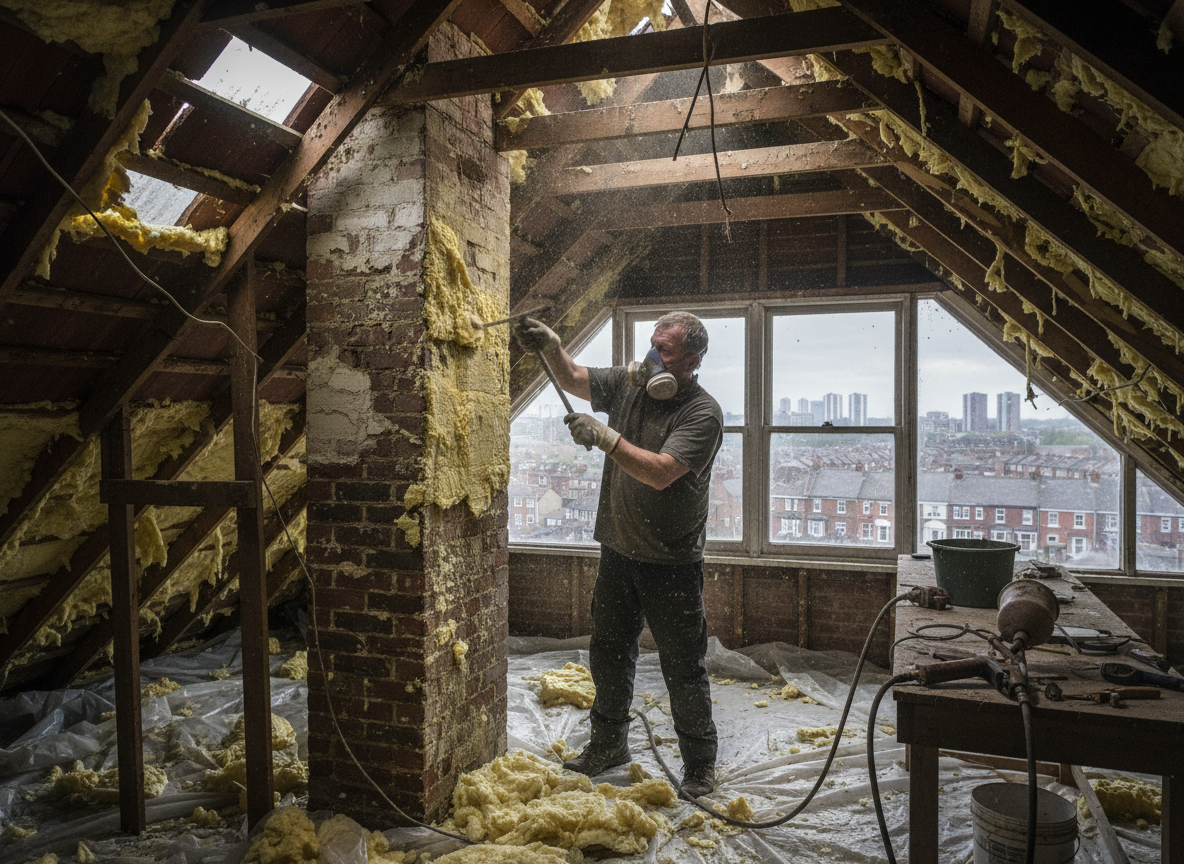
In Greater London homes spray foam insulation frequently traps moisture against original timber and brickwork, leading to rot and failed mortgage surveys within 5–15 years of installation. This issue appears regularly in Croydon terraces built before 1930 where breathable construction was standard.
Victorian and Edwardian Housing Stock Challenges
Croydon retains large numbers of Victorian terraces and Edwardian semis whose solid walls and timber joists were never designed for impermeable insulation. Spray foam applied directly to rafters or between joists blocks natural ventilation, allowing condensation to build up during the area's frequent autumn and winter rainfall. Over time this leads to sagging ceilings and weakened floor structures that owners notice only after water staining appears. Properties in South Croydon and Addiscombe show these patterns more often because many retain original slate roofs with limited eaves ventilation. Removal crews must work carefully around lath and plaster ceilings to avoid further damage while extracting closed cell material that has bonded tightly to historic timbers. Homeowners in these streets typically require follow-up assessments to confirm the structure has dried before any new insulation is considered.
Weather Patterns and Moisture Movement in the Croydon Area
Greater London experiences mild but persistently damp winters with average rainfall exceeding 600 mm annually, concentrated between October and February. This climate drives moisture through roof voids faster than in drier parts of the UK, especially when spray foam has sealed every gap. In Croydon the combination of urban heat islands and surrounding clay soils keeps ground moisture high, pushing vapour upward into lofts during milder spells. Properties near the Whitgift Centre and along the Brighton Road corridor often report higher humidity readings because of limited airflow between closely spaced terraces. Removal work therefore benefits from scheduling during drier spring months when external temperatures allow faster drying after extraction. Crews operating from the Interchange area on Station Road can reach these streets quickly, reducing exposure time for already compromised timbers.
Mortgage Lender Requirements Across South London Boroughs
Many mortgage providers now refuse lending on Greater London properties containing spray foam in lofts or cavities, citing long-term structural risks. In Croydon this has affected sales in areas such as Shirley and Purley where surveys flag the insulation as a defect. Lenders typically demand full removal plus independent verification that no rot remains before releasing funds. The process adds weeks to transactions and requires documented evidence of the extraction method used. Residents facing this situation often start by reviewing identification guides that explain visible warning signs before contacting specialists. Once removal is complete, a second inspection confirms the loft meets current lender standards, allowing the sale or remortgage to proceed without further delays.
Practical Steps for Croydon Homeowners
Owners in Croydon and surrounding boroughs benefit from beginning with a thorough loft inspection that records foam type, coverage depth and any visible timber discolouration. Next they arrange extraction using methods suited to the property age, followed by ventilation upgrades to restore airflow. Properties in Merton and Sutton share similar stock, so the same sequence applies when issues cross borough boundaries. After removal, monitoring moisture levels for several weeks confirms the structure has stabilised before new insulation decisions are made.