2026-10-22 ·
How To Identify Problem Spray Foam In Your Loft
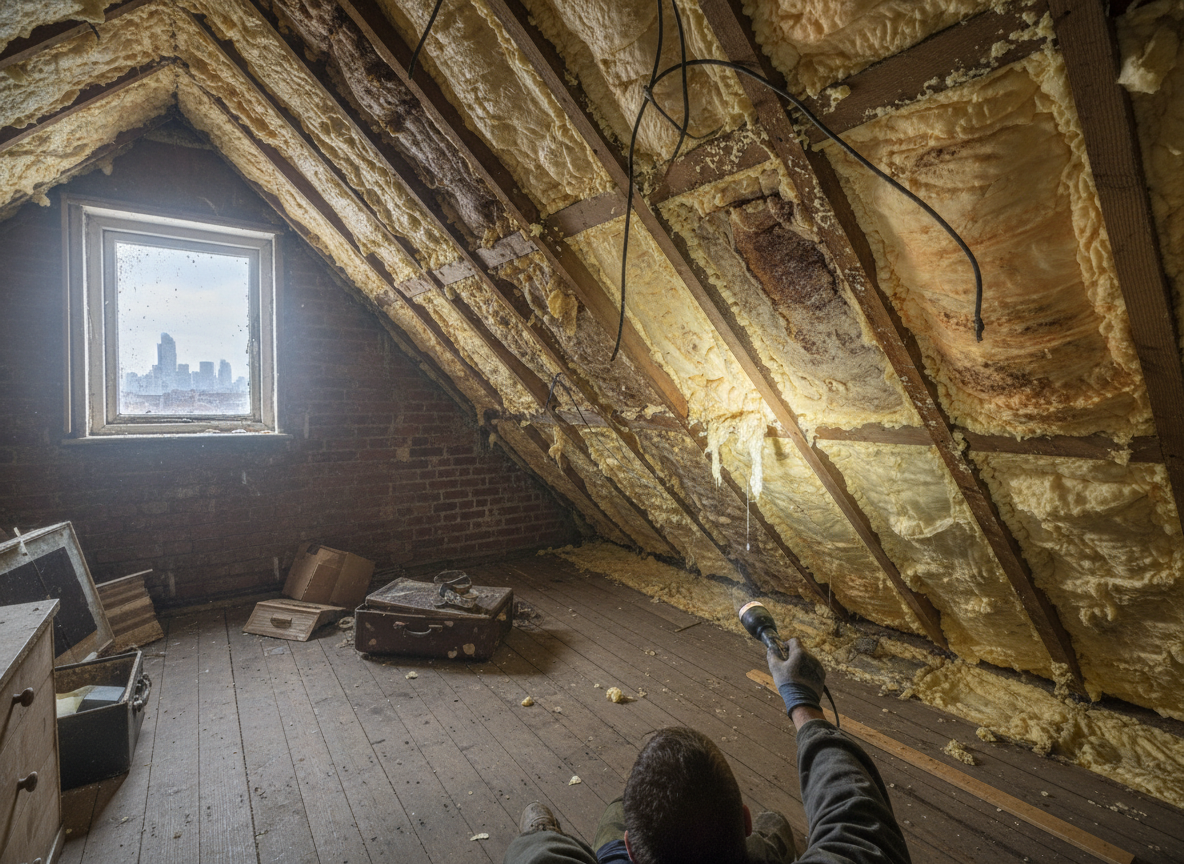
Problem spray foam in Croydon lofts shows itself first through persistent damp patches on the underside of roof timbers and visible mould streaks along the rafters. These signs appear most often in pre-1930 terraced houses found throughout Thornton Heath, South Norwood and Addiscombe where original slate roofs meet modern insulation upgrades. Homeowners notice the foam has started to pull away from the tiles or has turned a darker yellow-brown colour in patches exposed to winter rain ingress.
Checking for Moisture and Condensation Damage
Walk through the loft during daylight and shine a torch along the full length of each rafter. Look for dark staining where closed cell foam has trapped moisture against the timber instead of allowing the roof to breathe. In Greater London homes built before 1914, the original sarking felt often fails once foam is applied, leading to rot that starts at the eaves and works upward. Measure any soft spots in the wood with a screwdriver; if the blade sinks more than 5 mm without resistance, the joists have already begun to degrade. These conditions worsen after heavy autumn rainfall when water finds its way under lifted tiles and sits against the foam layer.
Identifying Mould and Air Quality Problems
Mould colonies appear as black or green spots on the foam surface and on adjacent brickwork or plaster. In Croydon properties near the railway lines around East Croydon station, poor loft ventilation combines with higher indoor humidity to accelerate growth within two to three winters. Run your hand across the foam; a musty smell that lingers on your fingers indicates active spores. Residents in nearby Sutton and Bromley report similar issues when foam covers the original eaves vents, cutting off the airflow that older roofs relied upon. Persistent coughing or irritated eyes when entering the loft space often traces back to these hidden colonies.
Assessing Structural and Insulation Failure
Problem foam loses its bond and sags between rafters, creating visible gaps that let cold air bypass the insulation. In local Edwardian semis, this sagging typically begins after 8–12 years when thermal movement and minor roof settlement pull the material loose. Check whether the foam has expanded beyond the rafter depth and now presses against electrical cables or junction boxes; this contact creates a fire risk that surveyors flag during mortgage valuations. Compare the loft temperature to the rooms below on a cold morning; large temperature differences point to failed insulation performance.
Professional Assessment Steps for Croydon Homeowners
Once these signs appear, book an insulation assessment before any removal work begins. Local surveyors examine the full roof void and test timber moisture content at multiple points. Many Croydon residents also review Local Challenges With Spray Foam In Greater London Homes to understand how Victorian construction details affect the job. If the assessment confirms widespread issues, loft spray foam removal teams can plan safe extraction that protects the original roof structure. Planning the work around drier summer months helps limit additional moisture during the process, as noted in Seasonal Considerations For Spray Foam Removal In Croydon.